Find a useful next step

Fat loss guides.

If fat loss is your current goal, start with the question you need to answer: food choices, an energy estimate or an activity plan. The NHS includes eating habits, movement, sleep and how you feel in its weight-management advice. Use this collection to choose your next resource with that wider picture in view. [2]

Choose your starting point
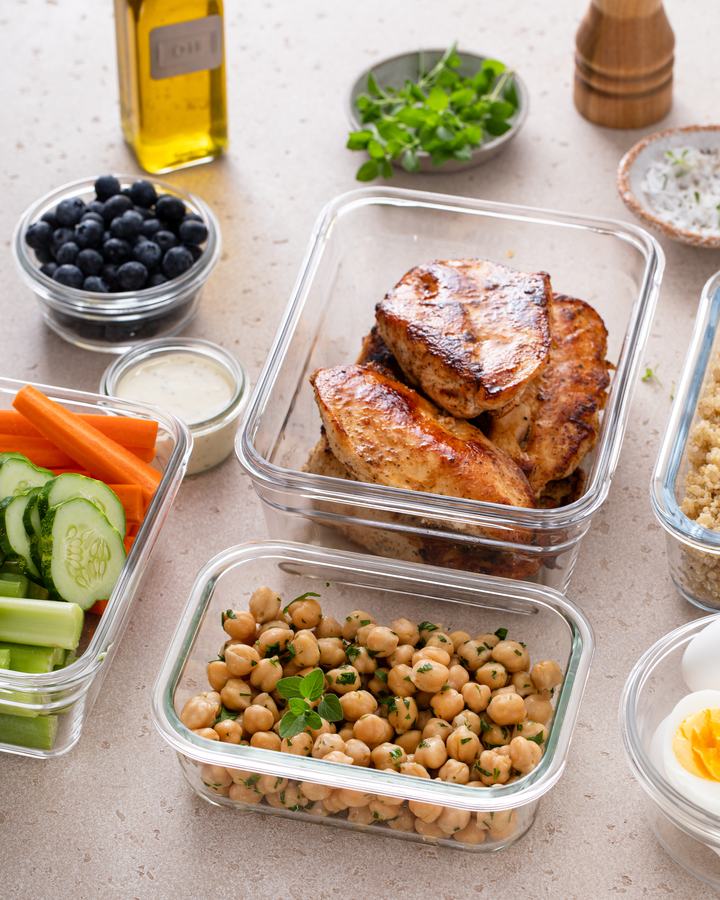
Glass containers of chickpeas, prepared food and cut vegetables, with blueberries and cooking ingredients on a kitchen worktop.
Ingredients arranged for meal preparation.fahrwasser / Envato
01 / Start where you are

Which decision is in front of you?

Choose one area to explore. The linked resources below are already available; the detailed fat-loss topic guides are listed separately in preparation.

02 / Practical food questions

Build from what you actually buy and prepare.

The NHS's starting points include everyday food and drink choices. The CDC also suggests looking at your current routine before choosing specific changes. [1] [2]

Available resources

Make the next food question easier to answer.

Start with the label guide for information on a package, or the preparation guide for organizing food ahead.

For broader food topics, browse the nutrition collection.

03 / Keep the assumptions visible

Use calorie outputs as calculated estimates.

These tools use profile inputs and selected activity assumptions. Their output is not a measurement of your personal metabolism or a guaranteed timeline.

Maintenance-energy estimate

TDEE calculator

Enter the requested body profile, formula and activity selections to calculate an estimate of total daily energy expenditure.

Read the assumptions behind the activity choice. An equation-based result is a starting estimate to interpret.

Goal-based calculation

Calorie calculator

Explore the intake targets calculated from the supplied profile, activity level and selected goal.

A selected goal changes a calculation; it does not establish that the result is an individually appropriate medical prescription.

Hall and colleagues' 2011 paper described a mathematical model of adult metabolism that accounts for changes in energy expenditure during weight loss. It illustrates why the time course needs more than a fixed weekly promise. This was modeling work, not an individual treatment plan. [3]

04 / Plan a real week

Choose activity you can return to.

The CDC suggests exploring activities you enjoy and can fit into your life. The NHS also includes movement alongside food choices and sleep in its guidance. [1] [2]

Available planning resources

Start with the setup and schedule.

Use these general resources to compare what a session or plan asks of you. A workout title alone cannot tell you how your body weight will change.

05 / The category topics

Find the question behind the guide.

These eight detailed guides are in preparation. Their titles become links as the guides are published.

Fundamentals

Understand the starting ideas.

Use these topics for the underlying questions about energy balance and a fat-loss approach.

  • Understanding a calorie deficit
  • How to lose fat
Food, training and routine

Connect the parts of the plan.

These topics address cutting, recomposition and walking in more detail.

  • Nutrition and training during a cut
  • Body recomposition
  • Walking and weight management
Body areas and appearance

Read the specific question.

These topics will examine the claims made about abdominal fat and definition.

  • Questions about belly fat
  • Abdominal definition
  • Understanding the “eight-pack” label
06 / Keep the result in view

Read what a claim actually establishes.

The outcome

Weight change and fat loss are different questions.

Body weight includes fat mass and fat-free mass; water is part of fat-free mass. A change on the scale does not identify which component changed. [4]

Our body-composition collection explains how to read measurements and estimates.

The timeframe

A general guideline is not your deadline.

The CDC emphasizes gradual, steady weight loss and habits that can be maintained. It also identifies differences in health, medicines and circumstances that can affect weight management. [1]

Look for the population, the outcome measured and the length of follow-up before interpreting a result as a promise for you.

When should the plan be individualized with professional support?

The NHS advises speaking with a healthcare professional before lifestyle changes if you have a medical condition, follow a special diet for your health, or have a current or previous eating disorder. If you have questions about your weight or medicines, the CDC also recommends discussing them with your healthcare provider. [2] [1]

Sources

Read the guidance and its scope.

  1. CDC: Steps for Losing Weight (January 17, 2025). Habits, realistic goals, monitoring and the role of individual circumstances.
  2. NHS Better Health: How to Lose Weight. Food choices, movement, sleep and professional support.
  3. Hall KD, et al. Quantification of the Effect of Energy Imbalance on Bodyweight (2011). Mathematical modeling of adult metabolism; PubMed abstract. DOI 10.1016/S0140-6736(11)60812-X.
  4. Prado CM, et al. Body-composition levels, models and terminology (2025). Definitions of fat mass and fat-free mass. PMID 40754386; DOI 10.1016/j.ajcnut.2025.05.022.

Prepared with AI assistance by the Fitness Instructor AI Editorial Team. Updated . Read our editorial policy.

Keep exploring

Choose the next question.

All training guides Nutrition guides

Search exercises, workouts, tools and guides

Scope: