
“I want to understand an exercise.”
Look up the exact movement name, check its equipment and read the setup. The library links to the available goblet-squat, bench-press and push-up guides.
Open the exercise libraryStart with the question in front of you: how a movement works, what you can do at home, or how to choose a training plan. The resources below are available now. The planned foundation topics cover starting weights, gym confidence, progress and adaptations; they are clearly marked in preparation.
You can use this page whether you are new to training or returning after a break. Choose one task, open the matching resource, and keep a simple record of what you try.
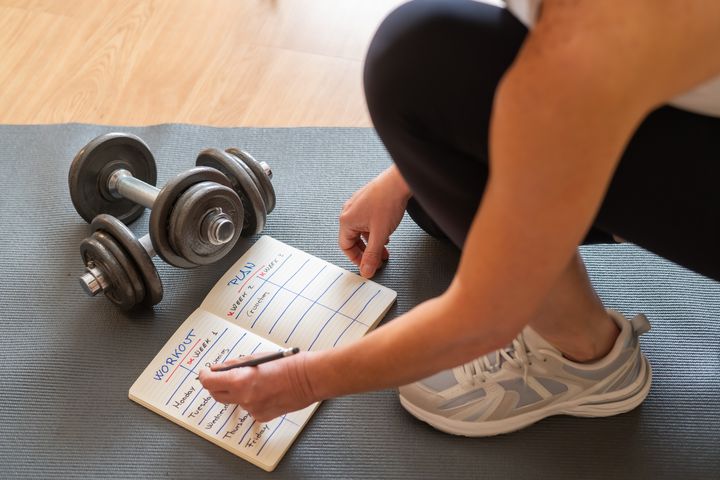
You do not need to read the whole library before making a useful choice. These three routes lead to resources you can open today.
Look up the exact movement name, check its equipment and read the setup. The library links to the available goblet-squat, bench-press and push-up guides.
Open the exercise libraryThe bodyweight collection compares movements and supported variations, includes an illustrative starting session, and explains where a bar or other equipment is still needed.
Explore bodyweight exercisesUse the program-selection worksheet to compare your available time, training goal and the demands of a plan. Keep questions about setup and progression alongside your notes.
Use the plan-selection guideACSM's 2026 guidance for healthy adults emphasizes regular resistance training and individual goals over finding a perfect, complex routine. Bodyweight, bands and conventional weights can all provide useful resistance. [1]
Consider the time, space and equipment you can actually use. The best-looking schedule on paper still needs to fit the week in which you will train.
Mayo Clinic advises learning proper form and seeking help from a trainer or other fitness specialist when you are new to strength training. Read the instructions for the particular exercise, rather than borrowing the setup from a different variation. [2]
Keep the movement name, version, resistance and completed repetitions together. A comparable setup makes your next session easier to understand; it is not a promise of a particular result.
The detailed guides below are planned. Until each page is available, its title stays plain text. Use the working resources above for something you can read now.
For general health, CDC guidance combines aerobic activity with muscle-strengthening work. It also explains that some activity is better than none and that activity can be spread into smaller chunks. Those weekly recommendations are a direction to work toward, not an entry test you must complete on your first day. [3]
Choose resistance you can handle with proper technique and increase it gradually as you get stronger. A weight shown in a photograph does not tell you what load to choose. [2]
Mayo Clinic advises speaking with a healthcare professional about a chronic condition or safety concerns before starting a program, and stopping an exercise that causes pain. A general guide cannot assess an injury. [2]
You can use it to identify a movement to learn, a setup to change or a question for a qualified professional. You do not need to turn it into a maximum-strength test.
Written with AI assistance by the Fitness Instructor AI Editorial Team. Revised November 3, 2026. These are general educational resources for adults. Read our editorial policy.