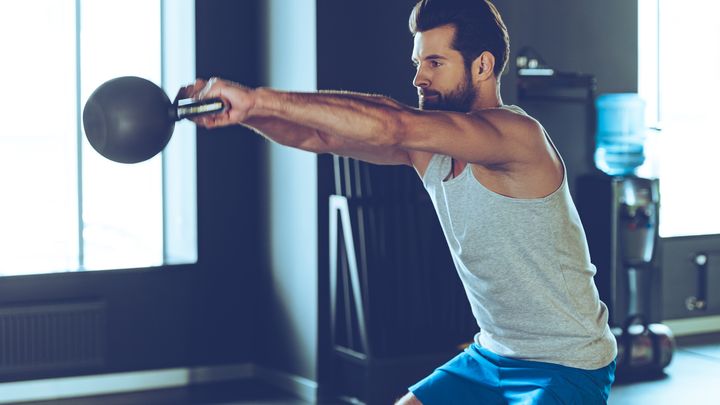
What actually counts as full-body There is no single “full-body muscle” — the label describes a movement that crosses several joints at once . A squat-to-press asks the ankles, knees, hips and shoulders to work together; a renegade row holds a plank while rowing. The opposite end of the scale is the single-joint isolation move, like a biceps curl.
Why it matters for your schedule: multi-joint work is how one exercise covers many muscles. In the 2017 review of 23 studies, single- and multi-joint exercises produced similar activation of the prime movers and similar long-term strength and size gains, and adding isolation work on top of a multi-joint programme brought no consistent extra benefit — the reviewers’ one caution was that the lumbar extensors may still benefit from dedicated single-joint work. [1]
The practical version was measured directly: in an 8-week trial, 30 untrained older adults did either two multi-joint movements (chest press and seated row) or the same two plus biceps curls and triceps extensions. Both groups improved their 12-repetition maximums and muscular endurance; the extra isolation work made no significant difference to any measure. [2] If you are short on time, the full-body pattern is the efficient answer, not a compromise.
Five patterns cover the whole body Sort any full-body move by what the body is doing and the library stops being a wall of names. The diagram below was drawn for this page.
Squat — the knees and hips bend together under load: thrusters, squat-to-press moves, jump squats.Hinge — the hips fold while the back stays long: kettlebell swings, deadlift variations, good mornings.Push — the arms drive a load away: push-ups, presses, burpee push-up variations.Pull — the load comes toward you: rows, pull-ups, renegade rows, rope work.Carry & move — the body transports itself or a load: bear crawls, farmer’s carries, mountain climbers, jumping jacks.Most “full-body” exercises mix two or more patterns — a thruster is a squat plus a push, a burpee is a hinge, a jump and a push. A week that touches all five patterns leaves no large muscle group untrained.
Editor’s picks while the guides are in preparation The individual guides below are being written; the selection logic is here today and each card becomes a working link the day its guide ships.
Guide Thruster A front squat that continues into an overhead press — legs, hips, shoulders and arms in one continuous drive. The single most complete barbell-or-dumbbell answer.
Guide Burpee Hinge down, jump back, push, jump forward, jump up. No equipment, and the heart rate climbs as fast as the legs work.
Guide Clean and Press Floor to shoulder to overhead: the classic two-beat barbell full-body lift. Learn the positions light before you add speed.
Guide Bear Crawl The moving plank: hands and feet walk while the trunk holds still — carries and bracing in one, no equipment.
Guide Mountain Climber A plank with running legs — bracing plus hip flexion at pace. Hips stay level; speed comes after control.
Guide Dumbbell Thruster The thruster with two dumbbells — friendlier on the wrists and shoulders, and each side works on its own.
Guide Power Clean The barbell pulled from floor to shoulder in one explosive pull — the athletic hinge at full speed. A coach’s eye helps early.
Guide Jumping Jack The simplest full-body mover — legs and arms together, anywhere, as a warm-up or a conditioning block.
A simple starter session One move per pattern, two to three sets each, twice a week. That schedule fits the ACSM’s current position stand — a 2026 overview of 137 reviews — which found strength improving from two or more sessions per week over two to three sets. [3]
The goblet squat guide is already live with full instructions.
So is the push-up guide — the rest of the linked guides ship next. Full sessions built on these patterns — full body workout , 20-minute full body , beginner home workout and 31 more — are in preparation and listed below.
Choose from the equipment you actually have No equipment at all The largest single group in this collection needs nothing: 430 of the 803 planned guides are bodyweight moves — burpees, bear crawls, mountain climbers, jumping jacks, squat and push-up variations. A floor and twenty minutes cover all five patterns.
One or two dumbbells Dumbbells unlock the loaded patterns: thrusters, clean and press, renegade rows, loaded carries. The dumbbell , kettlebell and barbell collections list each side once those pages ship.
In a gym Barbells for the classic lifts, a sled for pushes and drags, battle ropes and the rowing machine for conditioning — the equipment collections below group every planned guide by what it needs.
Does full-body training differ for women or men? No. The ACSM’s recommendations are written for healthy adults and make no separate prescription by sex. [3] The patterns and the starting point are the same; only the loads differ, and they differ person to person anyway.
How much should you start with? The ACSM’s 2026 position stand — an overview of 137 reviews covering more than 30,000 healthy adults — reports that strength improved with two or more sessions per week over two to three sets, and that muscle growth responded most to higher weekly volume, from about ten sets per muscle group. [3] For full-body work that means: two sessions a week touching all five patterns already trains everything; add sets before you add days.
And the workload can stay short: in the 8-week trial, a low-volume two-movement multi-joint routine still produced clear strength gains in untrained older adults. [2] More exercises are optional; more consistency is not.
Common full-body training mistakes Turning it into random cardio. A full-body session is still strength work: pick the patterns, control the reps, rest enough to keep the next set honest. Random circuits train sweat, not the movement.Adding isolation on top “just in case.” The 2017 review found no consistent extra benefit for most muscles — if time is short, spend it on the patterns, not on topping them up. [1] Skipping the hinge. Squats and pushes are easy to love; the hinge is where the back of the body lives. Keep a swing, deadlift or good-morning variation in every week.Chasing soreness as proof. Soreness measures novelty, not progress. Loads, reps and control over weeks are the scoreboard. [3] Going explosive before going slow. Power cleans and snatches are athletic skills; earn them with the slow versions first — or stay with thrusters and rows, which give the same coverage without the learning curve.Soreness, pain and when to stop Muscle soreness a day or two after a new or harder session is common enough to have a name — delayed onset muscle soreness (DOMS). A 2021 meta-analysis of 32 randomised trials (1,098 participants) found that cold therapy within an hour after exercise and heat therapy both reduced DOMS pain, with hot packs showing the largest measured effect. [4] Gentle movement, sleep and the next light session are the everyday tools; soreness fades on its own.
Soreness is a dull, symmetrical ache in worked muscles. Pain that is sharp, one-sided, in a joint, or that changes how you move is not soreness — that is a reason to stop the movement, not to push through it. For back pain specifically: see a GP if it is not improving after a few weeks or stops you doing daily activities; get urgent help for sudden severe pain, and emergency care for numbness in both legs, numbness around the genitals, changes in bladder or bowel control, or pain after a serious accident. [5]
This page is training information, not medical advice — a clinician who can examine you beats any article, including this one.
Questions people ask about full-body exercises What is the best exercise for the entire body? No single move wins — a 2017 review of 23 studies found similar results across multi-joint exercises, so the “best” one is the pattern mix you will repeat. [1] If you want one move that touches the most patterns at once, the thruster (squat plus press) is the usual answer.
What are 10 good exercises for a full body workout? Two per pattern: goblet squat and jump squat (squat); kettlebell swing and dumbbell deadlift (hinge); push-up and thruster (push); one-arm row and renegade row (pull); bear crawl and mountain climber (carry & move). Ten moves, every large muscle covered.
What are 5 full body workouts? Five session formats to look at as they ship here: the classic full-body workout, a 20-minute version, a beginner home session, a circuit format, and an interval (HIIT) format. All five are listed in the workout topics below; each is simply the five patterns arranged for a different schedule.
Is it okay to exercise when I’m sore? Usually yes, gently. Ordinary DOMS fades on its own, and light movement is fine while it does — the 2021 meta-analysis adds that cold soon after a session and heat both ease the ache. [4] Train the same patterns lightly or take a walk; skip max efforts until the soreness is mostly gone. Sharp or one-sided pain is a different story — stop and read the soreness section above.
Every topic in this collection, with honest status No individual full-body exercise guide is published yet; this hub is the first. Each entry below becomes a working link the day its guide ships — until then it stays plain text so you never hit a dead end.
Equipment collections (4) Bodyweight Full Body Exercises: Full List With Form Guides Kettlebell Full Body Exercises: Full List With Form Guides Barbell Full Body Exercises: Full List With Form Guides Dumbbell Full Body Exercises: Full List With Form Guides Anatomy (1) Major Muscle Groups: The Complete Guide for Training Workouts (34) 10 Minute Workout: Full Body When You Have No Time 15 Minute Workout: Full Body Dumbbell Circuit 20 Minute Full Body Workout (Dumbbells or Bodyweight) 30 Minute Full Body Workout (Gym Version) 45 Minute Workout: Full Body Session for the Gym or Home AMRAP Workout: 15-Minute As-Many-Rounds Session Apartment Workout: Quiet, No-Jumping Full Body Session Beginner Gym Workout: Your First Full Body Session Beginner Home Workout: First Session, No Equipment Circuit Training Workout: Full Body Circuit for Beginners Cool Down Routine After a Workout (5 Minutes) Desk Stretches: 10 Stretches You Can Do at Work EMOM Workout: 20-Minute Every-Minute-on-the-Minute Session Family Workout: Exercises to Do Together at Home Foam Roller Routine: 10-Minute Full Body Session Full Body Stretch Routine: 10 Stretches, 10 Minutes Full Body Workout: One Session, Every Major Muscle HIIT Workout: 20-Minute Bodyweight Intervals Hotel Gym Workout: Dumbbells and a Treadmill Only Low Impact Workout: Joint-Friendly Full Body Session Lunch Break Workout: 20 Minutes, Minimal Sweat Mindful Movement: A Gentle 15-Minute Beginner Routine Morning Stretch Routine: 7 Minutes to Loosen Up Outdoor Workout: Park and Playground Full Body Session Resistance Band Full Body Workout Rowing Machine Workout: 20-Minute Intervals for Beginners Sandbag Workout: Full Body Session and 8 Sandbag Exercises Smith Machine Workout: Full Body Session Superset Workout: Full Body Antagonist Pairs Tabata Workout: 4-Minute Protocol, Full Routine Trap Bar Workout: Deadlifts, Carries and Presses Treadmill Workouts: 8 Routines (Walking, Incline, Intervals) TRX Workout: Full Body Suspension Training Session Warm-Up Routine Before Lifting (5–10 Minutes) Comparisons (9) Clean and Press vs Thruster: Differences and Which to Choose Hang Clean vs Power Clean: Differences and Which to Choose Jumping Jack vs Star Jump: Differences and Which to Choose Power Clean vs Power Snatch: Differences and Which to Choose Power Jerk vs Split Jerk: Differences and Which to Choose Power Snatch vs Snatch: Differences and Which to Choose Push Jerk vs Push Press: Differences and Which to Choose Push Jerk vs Split Jerk: Differences and Which to Choose Stationary Bike vs Treadmill: Which to Choose Alternatives (10) Burpee Alternatives: 8 Substitutes by Equipment and Goal Clean and Jerk Alternatives: 8 Substitutes Elliptical Trainer Alternatives: 8 Substitutes Hang Clean Alternatives: 8 Substitutes by Equipment and Goal Jumping Jack Alternatives: 8 Substitutes Mountain Climber Alternatives: 8 Substitutes Power Clean Alternatives: 8 Substitutes Snatch Alternatives: 8 Substitutes by Equipment and Goal Stationary Bike Alternatives: 8 Substitutes Thruster Alternatives: 8 Substitutes by Equipment and Goal Browse the 803 exercise guides in preparation Grouped by the equipment each guide needs.
Bodyweight (430) 1 2 3 Jump: How to Do It, Muscles Worked and Variations 180 Jump Turns: How to Do It, Muscles Worked and Variations 360 Jump Turn: How to Do It, Muscles Worked and Variations 90 Jump Turns: How to Do It, Muscles Worked and Variations Advanced Frog Stand: How to Do It and Muscles Worked Agility Ladder Lateral Shuffle: How to Do It Alphabet: How to Do It, Muscles Worked and Variations Alternating Reach and Catch: How to Do It and Muscles Worked Archers: How to Do It, Muscles Worked and Variations Arm Walking Push Up: How to Do It and Muscles Worked Army Crawl: How to Do It, Muscles Worked and Variations Around the World Stretch: How to Do It and Muscles Worked Assault Run: How to Do It, Muscles Worked and Variations Attack and Retreat: How to Do It and Muscles Worked B Skip: How to Do It, Muscles Worked and Variations Backfists: How to Do It, Muscles Worked and Variations Balance Hold: How to Do It, Muscles Worked and Variations Banana Hold: How to Do It, Muscles Worked and Variations Bear Crawl Hold: How to Do It, Muscles Worked and Variations Bear Crawl Sit Through: How to Do It and Muscles Worked Bear Crawl: How to Do It, Muscles Worked and Variations Bench Lift Off Active: How to Do It and Muscles Worked Bench Lift Off Static: How to Do It and Muscles Worked Bent Knee Side Angle Pose: How to Do It and Muscles Worked Bicycle Recline Walk: How to Do It and Muscles Worked Bicycle: How to Do It, Muscles Worked and Variations Boat Pose: How to Do It, Muscles Worked and Variations Bodyweight Froggys: How to Do It and Muscles Worked Bodyweight Turkish Get Up: How to Do It and Muscles Worked Bosu Ball Burpee: How to Do It and Muscles Worked Bosu Ball Half Burpee: How to Do It and Muscles Worked Bosu Ball Toe Tap: How to Do It and Muscles Worked Bosu Ball Up and Over: How to Do It and Muscles Worked Bosu Burpee: How to Do It, Muscles Worked and Variations Bosu Half Burpee: How to Do It and Muscles Worked Bosu Mountain Climber: How to Do It and Muscles Worked Bosu Spiderman: How to Do It, Muscles Worked and Variations Bosu Step Over: How to Do It, Muscles Worked and Variations Bosu Sup Reg Sup Lateral Jump: How to Do It Bounces: How to Do It, Muscles Worked and Variations Bow Tie Pose: How to Do It, Muscles Worked and Variations Box Lateral Jump: How to Do It and Muscles Worked Box Lateral Shuffle: How to Do It and Muscles Worked Box March Low: How to Do It, Muscles Worked and Variations Box Side to Side Shuffle: How to Do It and Muscles Worked Boxing: How to Do It, Muscles Worked and Variations Bridge Stretch: How to Do It, Muscles Worked and Variations Brisk Walking: How to Do It, Muscles Worked and Variations Burpee Box Jump Over: How to Do It and Muscles Worked Burpee Box Jump: How to Do It, Muscles Worked and Variations Burpee Front Kick: How to Do It and Muscles Worked Burpee Over Bar: How to Do It, Muscles Worked and Variations Burpee: How to Do It, Muscles Worked and Variations Butt Kick Slow: How to Do It, Muscles Worked and Variations Butt Kick: How to Do It, Muscles Worked and Variations Buttkick: How to Do It, Muscles Worked and Variations Cardio Box Quick Feet: How to Do It and Muscles Worked Cardio Figure Eight Sprint: How to Do It and Muscles Worked Cardio In and Out Forward: How to Do It and Muscles Worked Cardio In and Out: How to Do It and Muscles Worked Cardio In In Out Out Shuffle: Form, Muscles Worked, Mistakes Cardio Karaoke: How to Do It, Muscles Worked and Variations Cardio Knee Taps: How to Do It and Muscles Worked Cardio Lateral Quick Feet: How to Do It and Muscles Worked Cardio Lateral Shuffle: How to Do It and Muscles Worked Cardio Long Jump Shuffle Back: How to Do It Cardio Quick Feet: How to Do It and Muscles Worked Cardio Shuttle Sprint: How to Do It and Muscles Worked Cardio Skater to Single Leg Burpee: How to Do It Cardio Skater: How to Do It, Muscles Worked and Variations Cardio Sprint In Place: How to Do It and Muscles Worked Cardio Step Out Jack: How to Do It and Muscles Worked Cardio Three Step Heismans: How to Do It and Muscles Worked Carioca: How to Do It, Muscles Worked and Variations Cat Pose: How to Do It, Muscles Worked and Variations Chair Mountain Climber: How to Do It and Muscles Worked Chest Press Partner Toss: How to Do It and Muscles Worked Circle Arm Stretching: How to Do It and Muscles Worked Circle Elbow Arm Stretching: How to Do It and Muscles Worked Clench Unclench: How to Do It, Muscles Worked and Variations Climber Taps: How to Do It, Muscles Worked and Variations Climbing Stairs: How to Do It, Muscles Worked and Variations Clock Taps: How to Do It, Muscles Worked and Variations Cone Jump: How to Do It, Muscles Worked and Variations Control Balance: How to Do It, Muscles Worked and Variations Cork Screw: How to Do It, Muscles Worked and Variations Corpse Pose: How to Do It, Muscles Worked and Variations Crab Walk: How to Do It, Muscles Worked and Variations Cradle Walk: How to Do It, Muscles Worked and Variations Criss Cross Elbow to Knee: How to Do It and Muscles Worked Criss Cross Jack: How to Do It and Muscles Worked Criss Cross: How to Do It, Muscles Worked and Variations Cross Body Mountain Climber: How to Do It and Muscles Worked Crow Pose: How to Do It, Muscles Worked and Variations Dorsal Flexion Hold: How to Do It and Muscles Worked Double Leg Butt Kick: How to Do It and Muscles Worked Double Leg Stretch Flow: How to Do It and Muscles Worked Double Leg Stretch: How to Do It and Muscles Worked Elbow Clicks: How to Do It, Muscles Worked and Variations Elbow Position: How to Do It, Muscles Worked and Variations Elbow Strikes: How to Do It, Muscles Worked and Variations Elbow Touch and Pressup: How to Do It and Muscles Worked Elevated Burpee: How to Do It, Muscles Worked and Variations Elevated Knee Tap: How to Do It and Muscles Worked Elevated Step Burpee: How to Do It and Muscles Worked Eversions: How to Do It, Muscles Worked and Variations Extended Dog Stretch: How to Do It and Muscles Worked Extended Side Angle Pose with Block: How to Do It Extended Side Angle Pose: How to Do It and Muscles Worked Fast Feet: How to Do It, Muscles Worked and Variations Femoral Nerve Mobilisation: How to Do It and Muscles Worked Field Sports: How to Do It, Muscles Worked and Variations Figure Eight: How to Do It, Muscles Worked and Variations Fish Pose: How to Do It, Muscles Worked and Variations Forward Cone Jump: How to Do It and Muscles Worked Forward Hurdle Run: How to Do It and Muscles Worked Forward Linear Jump: How to Do It and Muscles Worked Forward Linear Ladder Drill: How to Do It and Muscles Worked Forward Stepping Over Cones: How to Do It and Muscles Worked Frog Jump: How to Do It, Muscles Worked and Variations Frog Pose: How to Do It, Muscles Worked and Variations Frog Stand: How to Do It, Muscles Worked and Variations Front Kick: How to Do It, Muscles Worked and Variations Front Split: How to Do It, Muscles Worked and Variations Full Planche: How to Do It, Muscles Worked and Variations Glute Bridge March: How to Do It and Muscles Worked Glute March: How to Do It, Muscles Worked and Variations Gluteator: How to Do It, Muscles Worked and Variations Half Burpee: How to Do It, Muscles Worked and Variations Half Jack: How to Do It, Muscles Worked and Variations Half Lotus: How to Do It, Muscles Worked and Variations Half Monkey Pose: How to Do It and Muscles Worked Half Planche: How to Do It, Muscles Worked and Variations Hare Pose: How to Do It, Muscles Worked and Variations Headstand: How to Do It, Muscles Worked and Variations Heel Step Forward: How to Do It and Muscles Worked Heel Walking: How to Do It, Muscles Worked and Variations Heisman: How to Do It, Muscles Worked and Variations Hero Pose: How to Do It, Muscles Worked and Variations Hexagon Drill: How to Do It, Muscles Worked and Variations High Knee Run: How to Do It, Muscles Worked and Variations High Knee Skip: How to Do It, Muscles Worked and Variations High Knees: How to Do It, Muscles Worked and Variations Hip Hugger: How to Do It, Muscles Worked and Variations Hips Circle: How to Do It, Muscles Worked and Variations Hook Kick: How to Do It, Muscles Worked and Variations Hooks: How to Do It, Muscles Worked, Mistakes and Variations Hula Hoop: How to Do It, Muscles Worked and Variations Hurdle Barrier Jump: How to Do It and Muscles Worked Hurdle Jump: How to Do It, Muscles Worked and Variations I Into W Prone: How to Do It, Muscles Worked and Variations Inchworm Mountain Climber: How to Do It and Muscles Worked Inchworm to Push Up: How to Do It and Muscles Worked Inchworm: How to Do It, Muscles Worked and Variations Incline Skating: How to Do It, Muscles Worked and Variations Iron Cross Stretch: How to Do It and Muscles Worked Iron Cross: How to Do It, Muscles Worked and Variations Is Prone: How to Do It, Muscles Worked and Variations Jump and Reach: How to Do It, Muscles Worked and Variations Jump Bilateral Into Unilateral Landing: How to Do It Jump Burpee: How to Do It, Muscles Worked and Variations Jump In Jump Out: How to Do It and Muscles Worked Jump Off Box Single Leg Landing: How to Do It Jump on and Off Box: How to Do It and Muscles Worked Jumping Jack: How to Do It, Muscles Worked and Variations Jumping Mountain Climber: How to Do It and Muscles Worked Kegels: How to Do It, Muscles Worked and Variations Knee Across the Body: How to Do It and Muscles Worked Knee Circle: How to Do It, Muscles Worked and Variations Knee Strikes: How to Do It, Muscles Worked and Variations Knee Tap: How to Do It, Muscles Worked and Variations Knee to Elbows Side Standing: Form, Muscles Worked, Mistakes Kneeling Ta Stretch: How to Do It and Muscles Worked Knife Hand Strikes: How to Do It and Muscles Worked Ladder Four Step Shuffle: How to Do It and Muscles Worked Ladder High Knee: How to Do It and Muscles Worked Ladder Hop: How to Do It, Muscles Worked and Variations Ladder Hopscotch: How to Do It and Muscles Worked Ladder Inside Outside: How to Do It and Muscles Worked Ladder Lateral High Knee: How to Do It and Muscles Worked Ladder Lateral Skier: How to Do It and Muscles Worked Ladder Shuffle Hop: How to Do It and Muscles Worked Ladder Shuffle: How to Do It, Muscles Worked and Variations Ladder Single Leg Hop: How to Do It and Muscles Worked Ladder Single Leg Shuffle: How to Do It and Muscles Worked Ladder Speed Hop: How to Do It and Muscles Worked Lateral Bear Crawl: How to Do It and Muscles Worked Lateral Cone Jump: How to Do It and Muscles Worked Lateral Crawl: How to Do It, Muscles Worked and Variations Lateral Gorilla Crawl: How to Do It and Muscles Worked Lateral High Knee Skip: How to Do It and Muscles Worked Lateral Hurdle Run: How to Do It and Muscles Worked Lateral Jump: How to Do It, Muscles Worked and Variations Lateral Over Unders: How to Do It and Muscles Worked Lateral Shuffle Splits: How to Do It and Muscles Worked Lateral Shuffles: How to Do It and Muscles Worked Lateral Stretch: How to Do It, Muscles Worked and Variations Lateral Zig Zags: How to Do It and Muscles Worked Leg Crossover Stretch: How to Do It and Muscles Worked Leg Front Lift Jack: How to Do It and Muscles Worked Long Jump: How to Do It, Muscles Worked and Variations Long Slalom Jump: How to Do It and Muscles Worked Lying Overhead Flexion Stretch: How to Do It March Step: How to Do It, Muscles Worked and Variations March: How to Do It, Muscles Worked, Mistakes and Variations Marching Glute Bridge: How to Do It and Muscles Worked Marching in Place: How to Do It and Muscles Worked Mighty Pose: How to Do It, Muscles Worked and Variations Monkey Pose: How to Do It, Muscles Worked and Variations Mountain Climber Fast: How to Do It and Muscles Worked Mountain Climber Slow: How to Do It and Muscles Worked Mountain Climber with Towel: How to Do It and Muscles Worked Mountain Climber: How to Do It and Muscles Worked Multidirectional Ladder Drill: How to Do It Muscle Rail Board: How to Do It and Muscles Worked My Mountain: How to Do It, Muscles Worked and Variations O Pose Hold: How to Do It, Muscles Worked and Variations One Leg Knee Up Stretch: How to Do It and Muscles Worked One Leg Stretch: How to Do It, Muscles Worked and Variations Outdoor Hiking: How to Do It, Muscles Worked and Variations Overhead Punches: How to Do It and Muscles Worked Overhead Rack Roll: How to Do It and Muscles Worked Overhead Stretch: How to Do It and Muscles Worked Overhead to Floor Stretch: How to Do It and Muscles Worked Pacer Step: How to Do It, Muscles Worked and Variations Palm Strikes: How to Do It, Muscles Worked and Variations Partner Side Toss: How to Do It and Muscles Worked Partner Sit Up Toss: How to Do It and Muscles Worked Pause Bear Crawl: How to Do It and Muscles Worked Pilates Backstroke Prep Lying on Box: How to Do It Pilates Footwork First Position: How to Do It Pilates Footwork Heels on the Bar: How to Do It Pilates Footwork High Half Toe: How to Do It Pilates Footwork Lower and Lift: How to Do It Pilates Hip Lift: How to Do It and Muscles Worked Pilates Hip Rolls: How to Do It and Muscles Worked Pilates Long Stretch Plank Position: How to Do It Pilates Midback Series Circle Inward: How to Do It Pilates Midback Series Circle Outward: How to Do It Pilates Midback Series: How to Do It and Muscles Worked Pilates Reverse Expansion Teardrops Inward Kneeling Pilates Reverse Expansion Teardrops Outward Kneeling Pilates Running Lying on the Back: How to Do It Pilates Scooter: How to Do It, Muscles Worked and Variations Pilates Single Leg Bicycle: How to Do It and Muscles Worked Pilates Star Prep: How to Do It and Muscles Worked Place Jog: How to Do It, Muscles Worked and Variations Planche: How to Do It, Muscles Worked and Variations Plyo Rabbit: How to Do It, Muscles Worked and Variations Posterior Lower Leg Stretch: How to Do It and Muscles Worked Prayer Push: How to Do It, Muscles Worked and Variations Press Jack: How to Do It, Muscles Worked and Variations Prone Runner: How to Do It, Muscles Worked and Variations Pulse Row Stretch: How to Do It and Muscles Worked Punch and Kick: How to Do It, Muscles Worked and Variations Punches: How to Do It, Muscles Worked and Variations Push Up Jab Cross: How to Do It and Muscles Worked Push Up with Mountain Climber: How to Do It Pyramid Prayer: How to Do It, Muscles Worked and Variations Quadrant Jump Diagonal: How to Do It and Muscles Worked Quick Drop: How to Do It, Muscles Worked and Variations Reach and Catch: How to Do It, Muscles Worked and Variations Reclining Big Toe Pose: How to Do It and Muscles Worked Reverse Prayer: How to Do It, Muscles Worked and Variations Reverse Table: How to Do It, Muscles Worked and Variations Revolved Abdomen Pose: How to Do It and Muscles Worked Revolved Head to Knee: How to Do It and Muscles Worked Ricochet Jump: How to Do It, Muscles Worked and Variations Rim Or High Object Jump: How to Do It and Muscles Worked Rocket Jump: How to Do It, Muscles Worked and Variations Roll and Lift Reach: How to Do It and Muscles Worked Rotating Mountain Climber: How to Do It and Muscles Worked Rower Pike: How to Do It, Muscles Worked and Variations Running: How to Do It, Muscles Worked and Variations Scorpion Stretch: How to Do It and Muscles Worked Scorpion Twist Pose: How to Do It and Muscles Worked Scorpion Twist: How to Do It, Muscles Worked and Variations Scorpion: How to Do It, Muscles Worked and Variations Seagulls: How to Do It, Muscles Worked and Variations Seal Claps: How to Do It, Muscles Worked and Variations Seal Jack: How to Do It, Muscles Worked and Variations Seated Arm Stretch: How to Do It and Muscles Worked Seated Overhead Stretch: How to Do It and Muscles Worked Seated Wide Angle Pose: How to Do It and Muscles Worked Serratus Activation Cross Punch: How to Do It Shadow Boxing: How to Do It, Muscles Worked and Variations Shell Stretch: How to Do It, Muscles Worked and Variations Shoulder Touch Burpee: How to Do It and Muscles Worked Side Angle Pose with Rotation: How to Do It Side Hop Sprint: How to Do It, Muscles Worked and Variations Side Jack: How to Do It, Muscles Worked and Variations Side Jacknife: How to Do It, Muscles Worked and Variations Side Kick Back: How to Do It, Muscles Worked and Variations Side Kick Burpee: How to Do It and Muscles Worked Side Kick Kneeling: How to Do It and Muscles Worked Side Kick: How to Do It, Muscles Worked and Variations Side Lying Floor Stretch: How to Do It and Muscles Worked Side Mountain Climber: How to Do It and Muscles Worked Side Shuffle: How to Do It, Muscles Worked and Variations Side Step on and Off Box: How to Do It and Muscles Worked Side to Side Jump: How to Do It and Muscles Worked Single Leg Butt Kick: How to Do It and Muscles Worked Single Leg Reach and Jump: How to Do It and Muscles Worked Single Leg Stride Jump: How to Do It and Muscles Worked Sit Down and Stand Up: How to Do It and Muscles Worked Sit Up Punches: How to Do It, Muscles Worked and Variations Sitting Punches: How to Do It, Muscles Worked and Variations Skater Hop Tap: How to Do It, Muscles Worked and Variations Skater Hops: How to Do It, Muscles Worked and Variations Skater Jump: How to Do It, Muscles Worked and Variations Skater Step: How to Do It, Muscles Worked and Variations Ski Jack: How to Do It, Muscles Worked and Variations Skiers: How to Do It, Muscles Worked and Variations Skin the Cat: How to Do It, Muscles Worked and Variations Skip: How to Do It, Muscles Worked, Mistakes and Variations Slalom Jump: How to Do It, Muscles Worked and Variations Slalom Mountain Climber: How to Do It and Muscles Worked Slider Cross Body Knee: How to Do It and Muscles Worked Slider Curtsey: How to Do It, Muscles Worked and Variations Slider Inchworm to Push Up: How to Do It and Muscles Worked Slider Mountain Climber: How to Do It and Muscles Worked Slopes Towards Stretch: How to Do It and Muscles Worked Slow Bicycle: How to Do It, Muscles Worked and Variations Slow Burpee: How to Do It, Muscles Worked and Variations Slow Climber: How to Do It, Muscles Worked and Variations Slow Tempo Mountain Climber: How to Do It and Muscles Worked Smackdown Stretch: How to Do It and Muscles Worked Speed Bag Punches: How to Do It and Muscles Worked Speed Pull: How to Do It, Muscles Worked and Variations Spider Crawl: How to Do It, Muscles Worked and Variations Spider Mountain Climber: How to Do It and Muscles Worked Spider Walk: How to Do It, Muscles Worked and Variations Spiderman Burpee: How to Do It and Muscles Worked Spiderman Stretch: How to Do It and Muscles Worked Spiderman: How to Do It, Muscles Worked and Variations Split Jack: How to Do It, Muscles Worked and Variations Split Stretch: How to Do It, Muscles Worked and Variations Sprint Run In Place: How to Do It and Muscles Worked Sprint: How to Do It, Muscles Worked and Variations Sprinter Pull: How to Do It, Muscles Worked and Variations Sprinter Up: How to Do It, Muscles Worked and Variations Squat Thrust Burpee: How to Do It and Muscles Worked Squat Thrust: How to Do It, Muscles Worked and Variations Staff Pose: How to Do It, Muscles Worked and Variations Stair Climb: How to Do It, Muscles Worked and Variations Stair Jump: How to Do It, Muscles Worked and Variations Standing Balance Lateral Reach: How to Do It Standing Balance Lateral Toe Tap: How to Do It Standing Balance Reverse Toe Tap: How to Do It Standing Balance Toe Tap: How to Do It and Muscles Worked Standing Bicycle: How to Do It and Muscles Worked Standing Elbow Clap: How to Do It and Muscles Worked Standing Elbow Opener: How to Do It and Muscles Worked Standing Elbow Stretch: How to Do It and Muscles Worked Standing Elbow Touch: How to Do It and Muscles Worked Standing Gate Openers Frankensteins: How to Do It Standing Half Moon: How to Do It and Muscles Worked Standing Inversions Hold: How to Do It and Muscles Worked Standing Lateral Stretch: How to Do It and Muscles Worked Standing Opposition Reach: How to Do It and Muscles Worked Standing Side Kick: How to Do It and Muscles Worked Standing Split: How to Do It, Muscles Worked and Variations Standing Swimmer Stretch: How to Do It and Muscles Worked Standing Triple Jump: How to Do It and Muscles Worked Step Box Mountain Climber: How to Do It and Muscles Worked Step Burpee: How to Do It, Muscles Worked and Variations Step Half Jack: How to Do It, Muscles Worked and Variations Step Seal Jack: How to Do It, Muscles Worked and Variations Step Stretch: How to Do It, Muscles Worked and Variations Stepback Handraise: How to Do It and Muscles Worked Straddle Planche: How to Do It and Muscles Worked Straight Leg Walk: How to Do It and Muscles Worked Striders: How to Do It, Muscles Worked and Variations Sun Salutation: How to Do It, Muscles Worked and Variations Superman Stretch: How to Do It and Muscles Worked Supine Reverse Marches: How to Do It and Muscles Worked Supine Suitcase Pass: How to Do It and Muscles Worked Supported Matsyasana Pose: How to Do It and Muscles Worked Swimming Back Stroke: How to Do It and Muscles Worked Swimming Breast Stroke: How to Do It and Muscles Worked Swimming Butterfly: How to Do It and Muscles Worked Swimming Crawl: How to Do It, Muscles Worked and Variations Swimming: How to Do It, Muscles Worked and Variations Swipe Around Prone Alternating: How to Do It Swipe Around Prone: How to Do It and Muscles Worked Switch Jump Mountain Climber: Form, Muscles Worked, Mistakes T Drill: How to Do It, Muscles Worked and Variations Table Pose: How to Do It, Muscles Worked and Variations Table Top Pose Variation: How to Do It and Muscles Worked Thigh Taps: How to Do It, Muscles Worked and Variations Thomas Stretch: How to Do It, Muscles Worked and Variations Thread the Needle Hip Over Knees: How to Do It Three Point Slider: How to Do It and Muscles Worked Tip Toe Walking: How to Do It, Muscles Worked and Variations Toe Rolls: How to Do It, Muscles Worked and Variations Toe Taps: How to Do It, Muscles Worked and Variations Touchdown: How to Do It, Muscles Worked and Variations Toy Soldiers: How to Do It, Muscles Worked and Variations Tree Pose Hold: How to Do It, Muscles Worked and Variations Tree Pose: How to Do It, Muscles Worked and Variations Triple Jump: How to Do It, Muscles Worked and Variations Tuck Planche: How to Do It, Muscles Worked and Variations Turning Kick: How to Do It, Muscles Worked and Variations Turtle Pose: How to Do It, Muscles Worked and Variations Underhand Circle Draw: How to Do It and Muscles Worked Upper Body Chair Stretch: How to Do It and Muscles Worked Uppercut: How to Do It, Muscles Worked and Variations Upward Elbow Strike: How to Do It and Muscles Worked Upward Stretch: How to Do It, Muscles Worked and Variations Vajrasana Variation: How to Do It and Muscles Worked Vertical Shuffle Splits: How to Do It and Muscles Worked Walking Abduction: How to Do It and Muscles Worked Walking Frankenstein: How to Do It and Muscles Worked Walking High Knees: How to Do It and Muscles Worked Walking Inchworm Push Up: How to Do It and Muscles Worked Walking Pull Backs: How to Do It and Muscles Worked Walking: How to Do It, Muscles Worked and Variations Wall March Alternating: How to Do It and Muscles Worked Wall Reach: How to Do It, Muscles Worked and Variations Wall Supported Dorsal Flexion: How to Do It Warrior I: How to Do It, Muscles Worked and Variations Warrior One: How to Do It, Muscles Worked and Variations Warrior Pose: How to Do It, Muscles Worked and Variations Warrior Three: How to Do It, Muscles Worked and Variations Warrior Two: How to Do It, Muscles Worked and Variations Wide Legged Forward Fall: How to Do It and Muscles Worked Wild Thing Pose: How to Do It, Muscles Worked and Variations Yoga Plex: How to Do It, Muscles Worked and Variations Z Pose: How to Do It, Muscles Worked and Variations Z Up: How to Do It, Muscles Worked, Mistakes and Variations Medicine ball (67) Ball Slam: How to Do It, Muscles Worked and Variations Chest Press Slam: How to Do It and Muscles Worked Chest Press Toss: How to Do It and Muscles Worked Clean and Press Slam: How to Do It and Muscles Worked Full Med Ball Clean and Press: How to Do It Half Kneeling Medicine Ball Chest Pass: How to Do It Lateral Ball Slam: How to Do It and Muscles Worked Lateral Slam Battle Rope: How to Do It and Muscles Worked Lying Medicine Ball Power Drop: How to Do It Med Ball Burpee: How to Do It, Muscles Worked and Variations Med Ball Clean and Press: How to Do It and Muscles Worked Med Ball Hands to Feet: How to Do It and Muscles Worked Med Ball Rainbow Slam: How to Do It and Muscles Worked Med Ball Side Med Ball Slam: How to Do It and Muscles Worked Med Ball Standing Figure 8: How to Do It and Muscles Worked Med Ball Throw: How to Do It, Muscles Worked and Variations Med Ball Thruster: How to Do It and Muscles Worked Med Ball Wall Ball: How to Do It and Muscles Worked Medicine Ball Catch and Throw: How to Do It Medicine Ball Chest Pass: How to Do It and Muscles Worked Medicine Ball Chest Push to Run: How to Do It Medicine Ball Chest Throw Sit Up Wall: How to Do It Medicine Ball Chest Throw Supine: How to Do It Medicine Ball Chest Throw: How to Do It and Muscles Worked Medicine Ball Decline One Arm Overhead Throw: How to Do It Medicine Ball Decline Two Arm Overhead Throw: How to Do It Medicine Ball Hang Clean and Press: How to Do It Medicine Ball Lateral Lunge Slam: How to Do It Medicine Ball Lunge to Chest Pass: How to Do It Medicine Ball One Arm Overhead Throw: How to Do It Medicine Ball One Arm Throw: How to Do It and Muscles Worked Medicine Ball Overhead Backward Throw: How to Do It Medicine Ball Overhead Slam: How to Do It and Muscles Worked Medicine Ball Overhead Throw: Form, Muscles Worked, Mistakes Medicine Ball Pullover Throw Partner Standing: How to Do It Medicine Ball Pullover Throw Partner: How to Do It Medicine Ball Rotation Scoop Throw: How to Do It Medicine Ball Russian Twist Throw Partner: How to Do It Medicine Ball Seated Twist Throw: How to Do It Medicine Ball Side Throw Wall: How to Do It Medicine Ball Side Throw: How to Do It and Muscles Worked Medicine Ball Slam Bounce: How to Do It and Muscles Worked Medicine Ball Slam: How to Do It and Muscles Worked Medicine Ball Squat Overhead Throw: How to Do It Medicine Ball Throw Stability Ball: How to Do It Medicine Ball Twist Throw: How to Do It and Muscles Worked Medicine Ball Two Arm Overhead Throw: How to Do It Medicine Ball Wall Shot: How to Do It and Muscles Worked No Counter Movement Rotational Med Ball Throw: How to Do It Overhead Slam: How to Do It, Muscles Worked and Variations Power Slam Battle Rope: How to Do It and Muscles Worked Rainbow Slam: How to Do It, Muscles Worked and Variations Reverse Slam: How to Do It, Muscles Worked and Variations Rotational Med Ball Scoop Toss Facing Wall: How to Do It Rotational Slam: How to Do It, Muscles Worked and Variations Seated Med Ball Figure 8: How to Do It and Muscles Worked Self Toss: How to Do It, Muscles Worked and Variations Shuffle Into Rotational Medicine Ball Throw: How to Do It Single Leg Medicine Ball Chest Pass Wall Tap: How to Do It Slam: How to Do It, Muscles Worked, Mistakes and Variations Split Stance Anti Rotational Medicine Ball Scoop Toss Standing Backward Object Throws: How to Do It Standing Medicine Ball Chest Throw: How to Do It Step Behind Rotational Medicine Ball Throw: How to Do It Tall Kneeling Medicine Ball Chest Pass: How to Do It Wall Ball Shot: How to Do It, Muscles Worked and Variations Wood Chopper Toss: How to Do It and Muscles Worked Kettlebells (60) 1 Kettlebell Split Snatch: How to Do It and Muscles Worked 2 Kettlebell Clean and Press: Form, Muscles Worked, Mistakes 2 Kettlebell Clean: How to Do It and Muscles Worked 2 Kettlebell Jerk: How to Do It and Muscles Worked 2 Kettlebell Snatch: How to Do It and Muscles Worked 2 Kettlebell Split Snatch: How to Do It and Muscles Worked Balance Swing: How to Do It, Muscles Worked and Variations Bottoms Up Kettlebell Turkish Get Up to Hand: How to Do It Bottoms Up Kettlebell Turkish Get Up to Knee: How to Do It Bottoms Up Kettlebell Turkish Get Up: How to Do It Get Up: How to Do It, Muscles Worked and Variations Half Turkish Get Up: How to Do It and Muscles Worked Heel Get Up: How to Do It, Muscles Worked and Variations Kettlebell Alternating Hang Clean: How to Do It Kettlebell Alternating Single Arm Thruster: How to Do It Kettlebell Around the Head: How to Do It and Muscles Worked Kettlebell Clean and Jerk: How to Do It and Muscles Worked Kettlebell Clean and Press: How to Do It and Muscles Worked Kettlebell Clean Squat and Press: How to Do It Kettlebell Clean: How to Do It and Muscles Worked Kettlebell Cross Clean: How to Do It and Muscles Worked Kettlebell Dead Clean: How to Do It and Muscles Worked Kettlebell Figure Eight: How to Do It and Muscles Worked Kettlebell Figure: How to Do It and Muscles Worked Kettlebell Half Get Up: How to Do It and Muscles Worked Kettlebell Hang Clean and Jerk: How to Do It Kettlebell Hang Clean and Press: How to Do It Kettlebell Hang Clean: How to Do It and Muscles Worked Kettlebell Hang Squat Clean and Jerk: How to Do It Kettlebell Head Cutter: How to Do It and Muscles Worked Kettlebell Jerk: How to Do It, Muscles Worked and Variations Kettlebell One Arm Clean and Jerk: How to Do It Kettlebell One Arm Jerk: How to Do It and Muscles Worked Kettlebell One Arm Palm Clean: How to Do It Kettlebell One Arm Snatch: How to Do It and Muscles Worked Kettlebell One Arm Split Jerk: How to Do It Kettlebell One Arm Split Snatch: How to Do It Kettlebell Open Palm Clean: How to Do It and Muscles Worked Kettlebell Single Arm Clean and Press: How to Do It Kettlebell Single Arm Hang Clean and Jerk: How to Do It Kettlebell Single Arm Hang Clean and Press: How to Do It Kettlebell Single Arm Thruster: How to Do It Kettlebell Snatch Double: How to Do It and Muscles Worked Kettlebell Snatch: How to Do It and Muscles Worked Kettlebell Squat Clean and Jerk: How to Do It Kettlebell Sumo Deadlift High Pull: How to Do It Kettlebell Sumo High Pull: How to Do It and Muscles Worked Kettlebell Thruster: How to Do It and Muscles Worked Kettlebell Turkish Get Up Lunge: How to Do It Kettlebell Turkish Get Up Squat: How to Do It Kettlebell Walking Shoulder Flexion Bent Elbow Hold Seated Single Kettlebell Figure 8: How to Do It Single Kettlebell Standing Figure 8: How to Do It Single Kettlebell Turkish Get Up to Bridge: How to Do It Single Kettlebell Turkish Get Up: How to Do It Sword Swing: How to Do It, Muscles Worked and Variations Turkish Get Up to Bridge: How to Do It and Muscles Worked Turkish Get Up to Hand: How to Do It and Muscles Worked Turkish Get Up to Knee: How to Do It and Muscles Worked Turkish Get Up: How to Do It, Muscles Worked and Variations Barbell (53) Barbell Clean Deadlift: How to Do It and Muscles Worked Barbell Clean From Blocks: How to Do It and Muscles Worked Barbell Climbs: How to Do It, Muscles Worked and Variations Barbell Hang Clean and Press: Form, Muscles Worked, Mistakes Barbell Hang Clean Below the Knees: How to Do It Barbell Hang Snatch Below the Knees: How to Do It Barbell High Snatch: How to Do It and Muscles Worked Barbell Jerk Dip Squat: How to Do It and Muscles Worked Barbell Jerk: How to Do It, Muscles Worked and Variations Barbell One Arm Snatch: How to Do It and Muscles Worked Barbell Power Snatch From Blocks: How to Do It Barbell Rack Delivery: How to Do It and Muscles Worked Barbell Snatch From Blocks: How to Do It and Muscles Worked Barbell Snatch High Pull: How to Do It and Muscles Worked Barbell Snatch Press: How to Do It and Muscles Worked Barbell Squat Jerk: How to Do It and Muscles Worked Barbell Sumo Deadlift High Pull: How to Do It Burpee Over Barbell: How to Do It and Muscles Worked Clean and Jerk: How to Do It, Muscles Worked and Variations Clean and Press: How to Do It, Muscles Worked and Variations Clean High Pull: How to Do It, Muscles Worked and Variations Clean Pull: How to Do It, Muscles Worked and Variations Double Snatch: How to Do It, Muscles Worked and Variations Elevated Marching Hip Thrust: Form, Muscles Worked, Mistakes Hang Clean: How to Do It, Muscles Worked and Variations Hang Power Snatch: How to Do It and Muscles Worked Hang Pull: How to Do It, Muscles Worked and Variations Hang Snatch: How to Do It, Muscles Worked and Variations Hanging Power Clean: How to Do It and Muscles Worked High Pull Sled Drag: How to Do It and Muscles Worked Jerk Balance: How to Do It, Muscles Worked and Variations Muscle Clean: How to Do It, Muscles Worked and Variations Muscle Snatch: How to Do It, Muscles Worked and Variations Power Clean From Blocks: How to Do It and Muscles Worked Power Clean Jerk: How to Do It and Muscles Worked Power Clean: How to Do It, Muscles Worked and Variations Power Jerk: How to Do It, Muscles Worked and Variations Power Snatch: How to Do It, Muscles Worked and Variations Push Jerk: How to Do It, Muscles Worked and Variations Single Leg Snatch Grip Romanian Deadlift: How to Do It Snatch Balance: How to Do It, Muscles Worked and Variations Snatch Deadlift: How to Do It, Muscles Worked and Variations Snatch Grip Block Pull Deadlift: How to Do It Snatch Grip Deadlift: How to Do It and Muscles Worked Snatch Grip Deficit Deadlift: Form, Muscles Worked, Mistakes Snatch Grip Romanian Deadlift: How to Do It Snatch Pull: How to Do It, Muscles Worked and Variations Snatch: How to Do It, Muscles Worked and Variations Split Clean: How to Do It, Muscles Worked and Variations Split Jerk: How to Do It, Muscles Worked and Variations Split Snatch: How to Do It, Muscles Worked and Variations Squat Clean: How to Do It, Muscles Worked and Variations Thruster: How to Do It, Muscles Worked and Variations Machine (47) Air Bike: How to Do It, Muscles Worked and Variations Arc Trainer: How to Do It, Muscles Worked and Variations Assault Bike: How to Do It, Muscles Worked and Variations Cardio Assault Bike Arms Only: How to Do It Concept 2 Rowing Machine: How to Do It and Muscles Worked Curve Treadmill: How to Do It, Muscles Worked and Variations Elliptical Trainer: How to Do It and Muscles Worked Elliptical Training: How to Do It and Muscles Worked Gym Machines Beginners: How to Do It and Muscles Worked Gym Machines Cardio: How to Do It and Muscles Worked Gym Machines Weight Loss: How to Do It and Muscles Worked Incline Treadmill Running: How to Do It and Muscles Worked Indoor Cycling: How to Do It, Muscles Worked and Variations Jacobs Ladder: How to Do It, Muscles Worked and Variations Lever Sprint Machine: How to Do It and Muscles Worked Linear Low Machine: How to Do It and Muscles Worked Mountain Biking: How to Do It, Muscles Worked and Variations Multi Hip Machine: How to Do It and Muscles Worked Panatta Super Rowing Machine: Form, Muscles Worked, Mistakes Pendulum: How to Do It, Muscles Worked and Variations Recumbent Bike: How to Do It, Muscles Worked and Variations Recumbent Machine Bike: How to Do It and Muscles Worked Road Cycling: How to Do It, Muscles Worked and Variations Rower Knee Tuck: How to Do It, Muscles Worked and Variations Rower: How to Do It, Muscles Worked, Mistakes and Variations Rowing Machine Circular: How to Do It and Muscles Worked Rowing Machine Interval: How to Do It and Muscles Worked Rowing Machine: How to Do It, Muscles Worked and Variations Rowing Stationary Ergometer: How to Do It and Muscles Worked Ski Erg: How to Do It, Muscles Worked and Variations Sky Bike: How to Do It, Muscles Worked and Variations Stair Climber Session: How to Do It and Muscles Worked Stair Climber: How to Do It, Muscles Worked and Variations Stairmaster: How to Do It, Muscles Worked and Variations Stationary Bike Interval: How to Do It and Muscles Worked Stationary Bike: How to Do It, Muscles Worked and Variations Step Machine: How to Do It, Muscles Worked and Variations Stepmill: How to Do It, Muscles Worked and Variations Treadmill Backwards Walk: How to Do It and Muscles Worked Treadmill Jog: How to Do It, Muscles Worked and Variations Treadmill Running: How to Do It and Muscles Worked Treadmill Side Shuffle: How to Do It and Muscles Worked Treadmill Sprint: How to Do It and Muscles Worked Treadmill Walk: How to Do It, Muscles Worked and Variations Treadmill: How to Do It, Muscles Worked and Variations Vertical Climber Machine: How to Do It and Muscles Worked Weighted Machine Walk: How to Do It and Muscles Worked Dumbbells (36) Band Dumbbell Pallof Punch: How to Do It and Muscles Worked Burpee Over Dumbbell: How to Do It and Muscles Worked Devil Press: How to Do It, Muscles Worked and Variations Dumbbell Alternating Cobra Stability Ball: How to Do It Dumbbell Alternating Single Arm Thruster: How to Do It Dumbbell Bench: How to Do It, Muscles Worked and Variations Dumbbell Burpee to Overhead: How to Do It and Muscles Worked Dumbbell Burpee: How to Do It, Muscles Worked and Variations Dumbbell Clean and Jerk: How to Do It and Muscles Worked Dumbbell Clean and Press: How to Do It and Muscles Worked Dumbbell Clean: How to Do It, Muscles Worked and Variations Dumbbell Cobra Stability Ball: How to Do It Dumbbell Devils Press: How to Do It and Muscles Worked Dumbbell Ground to Overheads: Form, Muscles Worked, Mistakes Dumbbell Half Burpee Walkout: Form, Muscles Worked, Mistakes Dumbbell Hang Clean and Press: How to Do It Dumbbell Hang Clean: How to Do It and Muscles Worked Dumbbell Iron Cross: How to Do It and Muscles Worked Dumbbell Man Maker Push Up: How to Do It and Muscles Worked Dumbbell March: How to Do It, Muscles Worked and Variations Dumbbell One Arm Snatch: How to Do It and Muscles Worked Dumbbell Power Clean: How to Do It and Muscles Worked Dumbbell Push Jerk: How to Do It and Muscles Worked Dumbbell Service: How to Do It and Muscles Worked Dumbbell Single Arm Hang Clean and Press: How to Do It Dumbbell Single Arm Thruster: Form, Muscles Worked, Mistakes Dumbbell Snatch: How to Do It, Muscles Worked and Variations Dumbbell Standing Figure 8: How to Do It and Muscles Worked Dumbbell Thruster: How to Do It and Muscles Worked Dumbbell Turkish Get Up to Bridge: How to Do It Dumbbell Turkish Get Up: How to Do It and Muscles Worked Half Dumbbell Burpee: How to Do It and Muscles Worked Kneeling Dumbbell Hold to Stand: How to Do It One Arm Dumbbell Clean and Press: How to Do It Seated Dumbbell Figure 8: How to Do It and Muscles Worked Standing Dumbbell Side Kick: How to Do It and Muscles Worked Battle ropes (19) Alternating Large Waves Battling Ropes: How to Do It Alternating Small Waves Battling Ropes: How to Do It Alternating Waves with Kneeling Get Up Battle Ropes Asynchronous Waves: How to Do It and Muscles Worked Battle Ropes Alternating: How to Do It and Muscles Worked Battle Ropes Dual: How to Do It and Muscles Worked Battle Ropes Shoulder Rotation: How to Do It Battle Ropes Snake: How to Do It and Muscles Worked Battle Ropes: How to Do It, Muscles Worked and Variations Double Arm Circle Battle Ropes: How to Do It Double Waves Battle Ropes: How to Do It and Muscles Worked Half Kneeling Battle Ropes: How to Do It and Muscles Worked Jumping Jack Battle Ropes: How to Do It and Muscles Worked Lateral Waves: How to Do It, Muscles Worked and Variations Rope Alternating Wave: How to Do It and Muscles Worked Rope Wave: How to Do It, Muscles Worked and Variations Seated Battle Ropes: How to Do It and Muscles Worked Simultaneous Waves: How to Do It and Muscles Worked Tall Kneeling Battle Ropes: How to Do It and Muscles Worked Stability ball (18) Ball Hip Roll: How to Do It, Muscles Worked and Variations Ball Knee Strike: How to Do It and Muscles Worked Ball Toe Tap: How to Do It, Muscles Worked and Variations Stability Ball Balance: How to Do It and Muscles Worked Stability Ball Half Moon Stretch: How to Do It Stability Ball Hand and Foot Exchange: How to Do It Stability Ball Hands to Feet: Form, Muscles Worked, Mistakes Stability Ball Head Tilt: How to Do It and Muscles Worked Stability Ball High Balance: How to Do It and Muscles Worked Stability Ball Hip Roll: How to Do It and Muscles Worked Stability Ball Hover: How to Do It and Muscles Worked Stability Ball Hug: How to Do It and Muscles Worked Stability Ball Low Balance: How to Do It and Muscles Worked Stability Ball Prone Walkout: Form, Muscles Worked, Mistakes Stability Ball Rollover: How to Do It and Muscles Worked Stability Ball Squeeze: How to Do It and Muscles Worked Stability Ball Stork Stance: How to Do It and Muscles Worked Stability Ball Wall Circle: How to Do It and Muscles Worked Jump rope (17) Alternating Single Leg Jump Rope: How to Do It Criss Cross Jump: How to Do It and Muscles Worked Double Under Jump Rope: How to Do It and Muscles Worked Front to Back Jump Rope: How to Do It and Muscles Worked Jump Rope Double Jump: How to Do It and Muscles Worked Jump Rope: How to Do It, Muscles Worked and Variations One Leg Jump Roping: How to Do It and Muscles Worked Power Skipping: How to Do It, Muscles Worked and Variations Reverse Jump Rope: How to Do It and Muscles Worked Side to Side Jump Rope: How to Do It and Muscles Worked Single Leg Jump Rope: How to Do It and Muscles Worked Single Leg Side to Side Jump Rope: How to Do It Skipping Jump Rope: How to Do It and Muscles Worked Split Jump Roping: How to Do It and Muscles Worked Two Leg Jump Roping: How to Do It and Muscles Worked Unilateral Circle Jump Rope: How to Do It and Muscles Worked Unilateral Front to Back Jump Rope: How to Do It Resistance bands (17) Band Air Bike: How to Do It, Muscles Worked and Variations Band Alphabet: How to Do It, Muscles Worked and Variations Band Hip Lift: How to Do It, Muscles Worked and Variations Band Overhead Stretch: How to Do It and Muscles Worked Band Resisted Walk Back: How to Do It and Muscles Worked Band Seated Inversions: How to Do It and Muscles Worked Band Thruster: How to Do It, Muscles Worked and Variations Banded Y: How to Do It, Muscles Worked and Variations Cardio Band Press Jack: How to Do It and Muscles Worked Cardio Band Seal Jack: How to Do It and Muscles Worked Kegels Resisted: How to Do It, Muscles Worked and Variations Mini Band Clock Tap: How to Do It and Muscles Worked Mini Band Mountain Climber: How to Do It and Muscles Worked Mini Band Side to Side: How to Do It and Muscles Worked Mini Band Walking Mountain Climber: How to Do It Mini Band Walking Side to Side: How to Do It Weighted Band Pallof Punch: How to Do It and Muscles Worked Sled (9) Backward Sled Push: How to Do It and Muscles Worked Batwing Reverse Sled Drag: How to Do It and Muscles Worked Reverse Fly Sled Drag: How to Do It and Muscles Worked Reverse Sled Drag: How to Do It and Muscles Worked Sled Drag: How to Do It, Muscles Worked and Variations Sled Pull Through: How to Do It and Muscles Worked Sled Pull: How to Do It, Muscles Worked and Variations Sled Push: How to Do It, Muscles Worked and Variations Sled Sprint: How to Do It, Muscles Worked and Variations Other equipment (7) Sandbag Clean: How to Do It, Muscles Worked and Variations Tire Flip: How to Do It, Muscles Worked and Variations Weighted March In Place: How to Do It and Muscles Worked Weighted Power Straight: How to Do It and Muscles Worked Weighted Pull Sprint: How to Do It and Muscles Worked Weighted Push Sprint: How to Do It and Muscles Worked Weighted Side Touches: How to Do It and Muscles Worked Cable (6) Cable Bent Over Lateral Pulley: How to Do It Cable Judo Flip: How to Do It, Muscles Worked and Variations Cable Pallof Punch: How to Do It and Muscles Worked Cable Single Arm Thruster: How to Do It and Muscles Worked Cable Thruster: How to Do It, Muscles Worked and Variations Rope Jumping Performed For Time: How to Do It Weight plates (5) Plate Clean and Press: How to Do It and Muscles Worked Plate Clean: How to Do It, Muscles Worked and Variations Plate Reach: How to Do It, Muscles Worked and Variations Plate Thruster: How to Do It, Muscles Worked and Variations Weight Plate Hand Squeeze: How to Do It and Muscles Worked Foam roller (4) Angel Foam Roller Floor: How to Do It and Muscles Worked Elbow Extensor Mobilisation Kneeling Lacrosse Ball Field Goal Angel Foam Rolling: How to Do It Foot Arch Massage Ball Stretch: How to Do It Suspension trainer (3) Suspended Mountain Climber: How to Do It and Muscles Worked TRX Mountain Climber: How to Do It and Muscles Worked TRX Sprinter Start: How to Do It and Muscles Worked Landmine (2) Landmine Snatch: How to Do It, Muscles Worked and Variations Landmine Split Jerk: How to Do It and Muscles Worked Pull-up bar (1) Walking Pull Up: How to Do It, Muscles Worked and Variations Smith machine (1) Smith Machine High Pull: How to Do It and Muscles Worked Trap bar (1) Banded Trap Bar Deficit: How to Do It and Muscles Worked Sources and scope Gentil P, Fisher J, Steele J. A Review of the Acute Effects and Long-Term Adaptations of Single- and Multi-Joint Exercises during Resistance Training. Sports Medicine 2017;47(5):843–855. PMID 27677913. Twenty-three studies; similar prime-mover activation and long-term gains between single- and multi-joint work, no consistent extra effect from adding single-joint exercises; possible exception for the lumbar extensors.Bezerra ES, et al. Muscular performance and body composition changes following multi-joint versus combined multi- and single-joint exercises in aging adults. Applied Physiology, Nutrition, and Metabolism 2018;43(6):602–608. PMID 29351383. Thirty untrained older adults, 8 weeks: multi-joint-only versus multi-plus-single-joint gave similar gains in 12-RM, endurance and handgrip strength.Currier BS, et al. ACSM Position Stand: Resistance Training Prescription for Muscle Function, Hypertrophy, and Physical Performance in Healthy Adults: An Overview of Reviews. Medicine & Science in Sports & Exercise 2026;58(4):851–872. PMID 41843416. Session frequency, set and volume findings cited from its abstract.Wang Y, et al. Heat and cold therapy reduce pain in patients with delayed onset muscle soreness: a systematic review and meta-analysis of 32 randomized controlled trials. Physical Therapy in Sport 2021;48:177–187. PMID 33493991. Cold within one hour of exercise reduced DOMS pain within 24 h; heat also reduced pain, hot packs showing the largest effect; more high-quality studies are needed to rank the two.NHS (UK): Back pain — self-care, when to see a GP, urgent signs and emergency red flags. Opened 2 November 2026.All findings come from the studies’ own abstracts, with each study’s population stated next to it. The pattern diagram and all wording were created for this site; the photograph is licensed through Envato Elements for fitnessinstructor.ai (see the credit caption).
Written with AI assistance by Fitness Instructor AI Editorial Team . Updated November 2, 2026 . How we prepare our guides .