
EZ Bar Exercises
The EZ curl bar is one of the most effective specialty implements in strength training, designed specifically to match the human arm's anatomical carrying angle. By replacing the rigid straight barbell shaft with a sequence of ergonomic 30-to-45-degree angled cambers, the EZ bar allows lifters to curl and press with a natural semi-supinated or semi-pronated grip. This subtle angular shift drastically reduces torque across the distal radioulnar joint and medial epicondyle without sacrificing target muscle activation.
From staple arm builders like the preacher curl, skull crusher, and ez bar curl to upper-body mass movements such as the ez bar upright row, ez bar close grip curl, and ez bar bench press, the cambered bar provides heavy progressive overload with superior joint longevity. Browse our 20-exercise directory categorized by muscle group below, or jump straight into our complete arm hypertrophy routine.
To compare EZ bar training with other free weights, cables, and machines, explore our full library of exercises by equipment.
Explore foundational EZ bar movements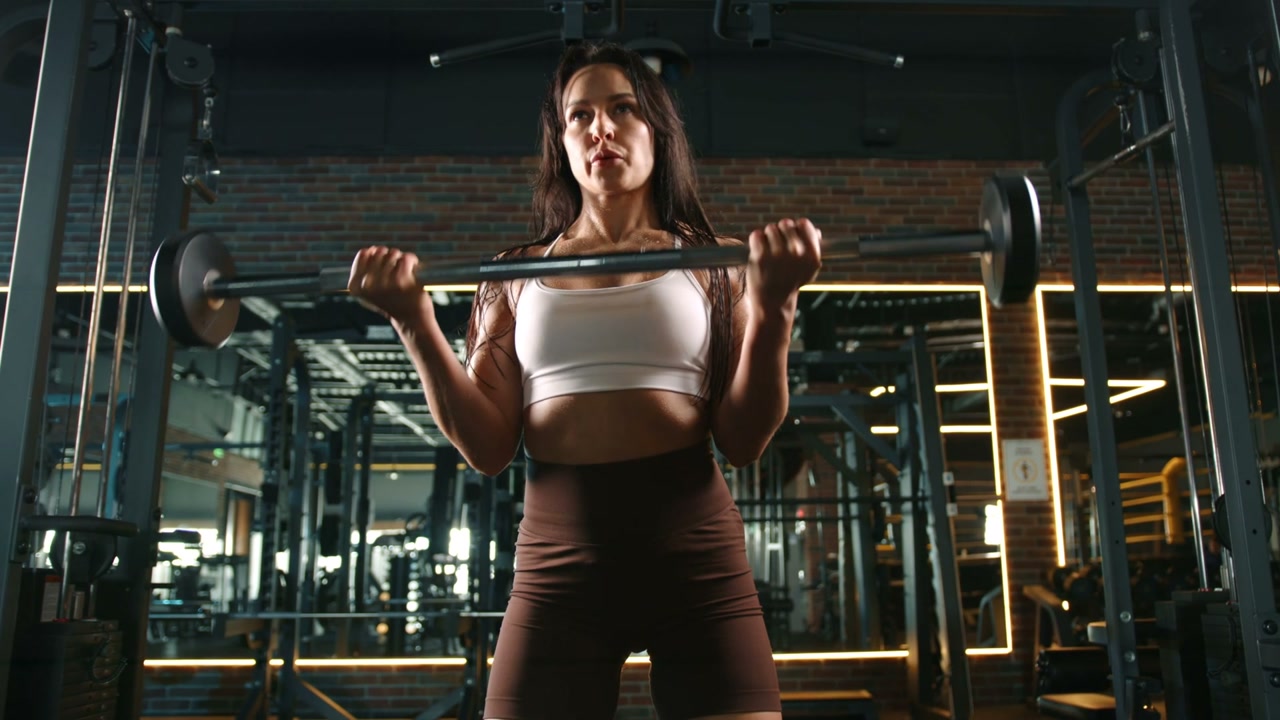
Key EZ Bar Exercises to Anchor Your Training
The EZ bar delivers targeted tension directly into the upper arms and shoulder girdle while sparing the wrists from painful shear stress. Below are the core multi-joint and isolation exercises that establish the foundation of cambered bar programming.
| Exercise | Movement Family | Primary Muscles | Biomechanical Advantage |
|---|---|---|---|
| Preacher curl | Slanted bench elbow flexion | Biceps brachii (short head), brachialis | Eliminates shoulder swing momentum and forces peak torque in the lengthened, early-to-mid range of elbow flexion. [1] |
| Skull crusher | Lying elbow extension | Triceps brachii (medial and lateral heads) | Isolates elbow extension while angled grips relieve medial elbow compression and ulnar collateral ligament shear during deep flexion. |
| EZ bar curl | Standing free elbow flexion | Biceps brachii (both heads), brachioradialis | Semi-supinated grip matches forearm valgus carrying angle, eliciting highest peak EMG activation across biceps brachii and brachioradialis. [1] |
| EZ bar preacher curl | Arm-supported isolation curl | Biceps brachii, brachialis | Combines preacher arm stabilization with angled cambers to prevent wrist hyperextension under heavy peak eccentric tension. |
| EZ bar reverse curl | Overhand forearm & brachialis pull | Brachioradialis, brachialis, wrist extensors | Semi-pronated hand position places biceps brachii in mechanical disadvantage, transferring primary load onto brachioradialis and forearm extensors. |
| EZ bar upright row | Vertical shoulder abduction & pull | Lateral deltoids, upper trapezius, biceps | Angled inner bends allow wrists to maintain comfortable internal rotation without severe impingement risk common to straight barbell upright rows. |
| EZ bar close grip curl | Narrow-grip elbow flexion | Biceps brachii (long head), brachialis | Narrow hand spacing emphasizes the outer long head of the biceps, contributing to upper arm peak development. |
| EZ bar bench press | Narrow-to-moderate horizontal press | Triceps brachii, pectoralis major, anterior deltoids | Cambered profile allows greater chest clearance and a natural grip angle that relieves carpal joint compression during lockout. |
EZ Bar Exercises by Muscle Group
While the EZ bar is celebrated as the quintessential arm-building tool, its undulating shaft serves compound pushes and pulls across multiple upper-body regions. Select an anatomical area to see how the bar optimizes biomechanics.
Biceps & Upper Arm Flexors
The semi-supinated grip on the outer cambers places the biceps brachii near its ideal length-tension curve while recruiting the underlying brachialis. Exercises include standing curls, preacher curls, drag curls, and concentration curls.
Triceps Brachii
The inner cambers provide the ideal hand spacing for lying and overhead tricep extensions, skull crushers, and close-grip presses, distributing joint compression evenly across the olecranon process without wrist deviation. Explore our specialized EZ bar tricep exercises guide.
Forearms & Brachioradialis
By gripping the inner or outer cambers in a semi-pronated (overhand) orientation, the reverse curl and reverse preacher curl isolate the brachioradialis and wrist extensor muscles, forging forearm thickness and grip strength.
Shoulders & Trapezius
Upright rows and front raises performed with an EZ bar allow comfortable hand positioning that avoids extreme internal shoulder rotation, shielding the subacromial space from impingement while targeting the lateral deltoids and upper traps.
Chest & Pectorals
The close-grip EZ bar press and EZ bar bench press provide a joint-friendly pressing variation that overloads the triceps and sternal pectoralis major with minimal stress on the sternoclavicular joints.
Upper Back & Lats
Reverse-grip bent-over EZ bar rows provide heavy lat and lower-trap overload, allowing the elbows to track close to the ribcage while keeping wrists comfortably neutral.
The Carrying Angle & Why the Straight Bar Hurts Your Wrists
Understanding why the EZ curl bar was invented requires examining the natural functional anatomy of the human elbow and forearm complex.
Clinical Safety Alert: Medial Epicondylitis & Wrist Hygiene
If you experience inner elbow tenderness or wrist pain during straight-bar curls, you are likely suffering from traction overload of the common flexor tendon. Immediately swapping straight barbells for an EZ curl bar relieves direct shear stress. Maintain a neutral wrist alignment throughout each repetition—do not let the wrists hyperextend under load. For athletes with pre-existing distal radioulnar joint instability, pairing the EZ bar with a thumbless or semi-open grip further decreases carpal tunnel compression.
Muscle Recruitment Dynamics: EZ Bar vs Straight Barbell vs Dumbbells
A frequent myth in bodybuilding forums suggests that the EZ bar recruits less bicep muscle mass than a straight barbell because the forearm is not fully supinated. Peer-reviewed electromyographic (EMG) research disproves this misconception.
Complete EZ Bar Arm Hypertrophy Routine
This evidence-based arm routine alternates agonist and antagonist movements between the biceps and triceps, maximizing intra-session recovery while driving high volume and mechanical tension.
Workout Overview: Upper Arm & Forearm Specialization
Frequency: 1 to 2 sessions per week (integrated into an Upper/Lower or Push/Pull/Legs split).
Target Goals: Hypertrophy of biceps brachii, triceps brachii, brachialis, and forearm flexors/extensors with zero wrist or elbow joint pain.
Warm-up: 5 minutes of wrist mobility, light band pull-aparts, and 2 empty-bar warm-up sets.
| Exercise | Sets & Reps | Rest | Tempo | Execution & Form Cues |
|---|---|---|---|---|
| EZ bar bicep curl | 3 sets × 8–10 reps | 90 sec | 3-0-1-0 | Stand tall with shoulders pinned back. Grip outer cambers. Curl weight toward clavicles without swinging torso. Lower under control over 3 seconds. |
| EZ bar skull crusher | 3 sets × 8–10 reps | 90 sec | 3-1-1-0 | Lie flat on bench gripping inner cambers. Angle upper arms backward 15 degrees past vertical. Hinge at elbows lowering bar toward crown of head; press to lockout. |
| EZ bar preacher curl | 3 sets × 10–12 reps | 60 sec | 3-0-1-1 | Sit firmly with triceps flushed against pad. Grip inner or outer cambers. Curl upward smoothly; hold 1-second peak contraction without lifting elbows off pad. |
| Close grip EZ bar press | 3 sets × 8–10 reps | 90 sec | 2-1-1-0 | Lie flat gripping inner cambers at shoulder width. Lower bar to lower sternum tucking elbows to 45 degrees. Drive through palms to full elbow extension. |
| EZ bar reverse curl | 3 sets × 12–15 reps | 60 sec | 2-0-1-0 | Overhand pronated grip on outer cambers. Keep wrists rigid and aligned with forearms. Squeeze brachioradialis at top; lower slowly under full control. |
| EZ bar upright row | 3 sets × 10–12 reps | 60 sec | 2-0-1-1 | Shoulder-width grip on outer cambers. Pull elbows up and out toward shoulder height, pausing briefly at the top to fire lateral delts and traps. |
Explore All 20 EZ Bar Exercises
Browse our complete library of cambered bar movements, including isolated curls, overhead tricep extensions, presses, and rowing patterns.
Preacher curl
Locked-in elbow flexion on an angled bench that removes body sway and maximizes tension on the bicep belly.
Skull crusher
The definitive triceps mass builder, targeting the long and medial heads through deep elbow flexion behind the head.
EZ bar curl
The foundational free-weight bicep lift, combining progressive overload with wrist-friendly semi-supinated cambers.
EZ bar preacher curl
Pad-supported bicep isolation combining preacher mechanics with ergonomic angled hand positions.
EZ bar reverse curl
Overhand grip curl that builds massive forearms and thickens the upper arm by overloading the brachioradialis.
EZ bar upright row
Vertical pulling movement for lateral deltoid width and trapezius thickness with comfortable wrist internal rotation.
EZ bar close grip curl
Narrow hand placement that emphasizes the outer long head of the biceps for a taller bicep peak.
EZ bar bench press
Horizontal compound press delivering heavy mechanical tension into the chest and triceps with joint relief.
EZ bar bicep curl
Classic standing curl targeting both heads of the biceps brachii and deep brachialis through a full range of motion.
EZ bar front raise
Targeted shoulder isolation for the anterior deltoids, utilizing the angled bar for shoulder-friendly external clearance.
EZ bar reverse preacher curl
Brachioradialis and wrist extensor overload with upper arm stabilization that prevents torso swinging.
EZ bar skull crusher
Lying tricep extension performed with the cambered bar to keep wrist joints pain-free during deep elbow bends.
Reverse preacher curl
Strict forearm isolation movement emphasizing the extensor carpi radialis and brachioradialis.
EZ bar bent over row reverse grip
Underhand bent-over row allowing elbows to tuck tightly against the torso, driving deep latissimus dorsi activation.
EZ bar drag curl
Elbows travel backward as the bar drags upward along the torso, eliminating front delt assistance and isolating the biceps.
EZ bar incline tricep extension
Performed on a 45-degree incline bench, placing the long head of the triceps under a massive passive stretch.
California skullcrusher
Hybrid exercise transitioning from a lying skull crusher into a close-grip press, allowing overload of triceps eccentrics.
Close grip EZ bar press
Heavy compound pressing movement targeting tricep lockout power and inner chest development.
EZ bar back head lying tricep extension
Lying extension lowering the bar beyond the bench edge for extreme stretch on the triceps long head tendon.
EZ bar concentration curl
Seated elbow-supported curl that isolates unilateral and bilateral arm flexion without kinetic leakage.
EZ Bar vs Straight Barbell vs Dumbbells
Choosing the right implement depends on your injury history, anatomical carrying angle, and specific training goals.
Biomechanical Differences at a Glance
- EZ Bar vs Straight Barbell: Straight barbells enforce 180-degree supination, forcing the wrists to resist the natural carrying angle under load. The EZ bar aligns with the natural 10-to-15-degree valgus angle, relieving wrist and elbow strain without any reduction in biceps EMG activation. [1]
- EZ Bar vs Dumbbells: Dumbbells allow completely free wrist rotation throughout the movement arc, which is ideal for athletes rehabilitating acute wrist injuries. However, the EZ bar allows significantly heavier progressive overload and dual-hand stability, making it superior for rapid progressive strength adaptations.
- EZ Bar vs Cable Attachments: Cable curl bars provide continuous tension across the entire range of motion, whereas the EZ bar follows a gravitational loading curve that peaks when the forearms are parallel to the floor (90 degrees of flexion). Pairing both tools yields optimal hypertrophic stimulus across all muscle lengths.
Frequently Asked Questions About EZ Bar Training
What is the 3-3-3 rule in the gym?
The 3-3-3 rule is a common structured heuristic used by personal trainers and lifters to simplify program design. It typically refers to performing 3 exercises per targeted muscle group, completing 3 working sets per exercise, and following a consistent 3-day weekly frequency (such as Full Body or Push/Pull/Legs). In other contexts, it refers to a 3-second eccentric tempo, a 3-second isometric hold, and a 3-second concentric phase used to maximize time-under-tension for muscle hypertrophy.
What is the EZ Bar good for?
The EZ bar is designed to relieve wrist and elbow joint compression during arm training. By providing angled cambers, it matches the natural carrying angle of the forearm, preventing medial epicondyle strain (golfer's elbow) and triangular fibrocartilage complex (TFCC) wrist pain. It is especially effective for bicep curls, preacher curls, skull crushers, close-grip bench presses, and upright rows.
What are the big 3 exercises for the core?
Developed by renowned spine biomechanist Dr. Stuart McGill, the “Big 3” core exercises are the McGill Curl-up, the Side Bridge (Side Plank), and the Bird-Dog. Unlike traditional sit-ups that subject the lumbar discs to repetitive high-load flexion, the Big 3 build robust 360-degree spinal endurance and stiffness without exceeding safe lumbar compressive thresholds.
What are the big 4 barbell exercises?
The classic “Big 4” barbell exercises are the Barbell Back Squat, the Barbell Bench Press, the Conventional Deadlift, and the Overhead Press (Military Press). Together, these multi-joint compound lifts cover the fundamental human movement patterns: squatting, horizontal pushing, hip hinging/pulling, and vertical pressing, stimulating whole-body strength and neuromuscular coordination.
Sources & Academic References
- Marcolin G, Panizzolo FA, Petrone N, et al. Differences in electromyographic activity of biceps brachii and brachioradialis while performing three variants of curl. PeerJ. 2018;6:e5165. [PMID: 29988220]. Demonstrates peak EMG activation with EZ bar curls.
- Dymeck LG. Barbell. US Patent #2,622,881. Washington, DC: US Patent and Trademark Office; 1950. The foundational patent establishing the biomechanical cambered curl bar.
- Currier BS, Mcleod JC, Banfield L, et al. Resistance training prescription for muscle hypertrophy in healthy adults: a systematic review and meta-analysis. Br J Sports Med. 2026. [PMID: 36334230]. Guidelines on progressive overload and volume thresholds.
- Haff GG, Triplett NT. Essentials of Strength Training and Conditioning. 4th ed. Champaign, IL: Human Kinetics; National Strength and Conditioning Association (NSCA); 2021. Biomechanics of free-weight specialty bars and elbow flexor mechanics.
All exercise recommendations and biomechanical cues provided in this hub are for educational purposes. Athletes experiencing persistent wrist or medial elbow pain should consult a physical therapist or medical professional for diagnosis.