
Prepare to move
Begin with easy activity, then rehearse movements related to the session ahead. A dynamic warm-up builds gradually rather than staying in one position. [2]
Build a warm-upChoose a stretch for the body area you want to move, then decide what you need it to do. A held position can train flexibility; a controlled moving drill practices how you use your range. Neither is a complete warm-up or a diagnosis for pain. Start with the three examples below, or browse by body area. [4]
The examples on this page are available now. The 17 focused body-area collections are in preparation and clearly labeled.
Begin with easy activity, then rehearse movements related to the session ahead. A dynamic warm-up builds gradually rather than staying in one position. [2]
Build a warm-upUse a gentle, steady hold when your goal is flexibility. Work on both sides and repeat the practice regularly. [1]
See a starting doseYou may enjoy stretching after exercise. Treat it as optional flexibility work, rather than a proven way to prevent tomorrow's muscle soreness. [6]
Read the recovery evidenceFor this guide, flexibility means the range available at a joint; mobility includes actively controlling that range. Reaching a position with help and moving into it under your own control are different tasks. Stretching may help with range, while movement practice also asks for strength and coordination. [4]
These examples cover a lower-leg, back-of-thigh and shoulder option. Warm up first, move slowly and stop at gentle tension. Pain is a reason to ease off, not a target to work toward. [1]
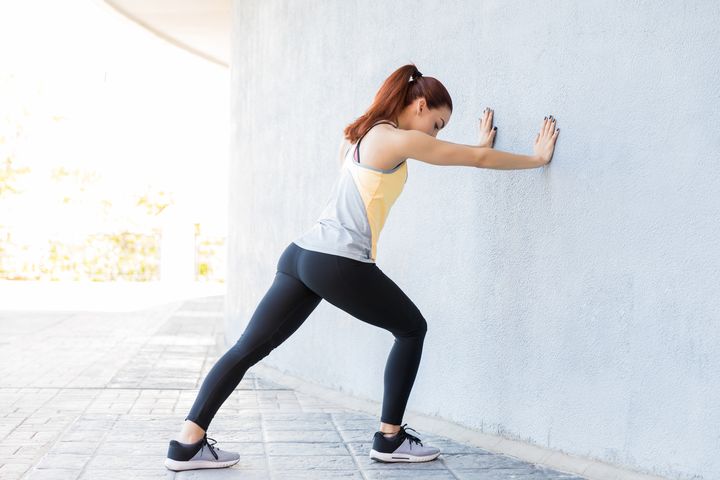
The photo above shows this setup. Both Mayo Clinic and the NHS describe the straight rear leg and heel-down position. [3]
Lie beside the outer corner of a wall or a doorway. Raise one leg and rest its heel against the wall, beginning with a slight bend in the knee. Gently straighten that knee only until you feel the stretch behind the thigh; then switch sides after the hold. This is Mayo Clinic's supported version. [1]
The NHS offers a different lying version: support the raised leg with your hands below the knee, keeping the other knee bent and foot on the floor. Use one setup rather than combining both. [3]
Relax your shoulders and bring one arm across your chest. Use the other arm to hold the upper arm and guide it gently across. Keep pressure off the elbow. Change sides after the hold. [8]
Mayo Clinic includes the same across-the-body shoulder movement. If your shoulder is painful or injured, choose exercises with a clinician rather than treating this as a rehabilitation plan. [1]
If floor positions do not suit you, the NHS also provides a seated movement routine. It uses a stable chair without wheels, with the feet supported on the floor. [10]
| Part of the session | Starting guidance |
|---|---|
| Before the stretches | 5–10 minutes of light activity to warm up. |
| Each hold | About 30 seconds, at a gentle pull rather than pain. |
| Repetitions | 2–4 holds on each side. |
| Frequency | Major muscle groups at least 2–3 days a week. |
This is a general starting reference, not a required dose for every joint or medical condition. The NHS post-exercise routine uses shorter 15–20-second holds. Follow a routine appropriate to you rather than assuming every stretch needs the same timing. [3]
A worked example: three stretches × two sides × two holds × 30 seconds equals six minutes of holding time. Changing position and warming up add time. The calculation helps you plan a repeatable session; it is not a special six-minute treatment.
All 17 body-area collections below are in preparation. Search by a familiar name such as pecs, quads or calves, or choose an area. The area groups are navigation labels, not diagnoses.
No matching body areas. Try a common name or reset the filters.
Begin with easy walking, cycling or similar light activity. Then practice movements related to what you are about to do, increasing the pace or effort gradually. Mayo Clinic describes this as a dynamic warm-up. Long static holds immediately before sprinting or other intense work may reduce performance, so more stretching is not automatically better preparation. [2]
The NHS warm-up sequence offers a practical example of moving preparation: marching, heel digs, knee lifts, shoulder rolls and small knee bends. Its whole routine takes at least six minutes. These moving exercises serve a different purpose from staying in a held stretch. [7]
A 2025 meta-analysis of 15 studies did not find a clear reduction in later muscle soreness from post-exercise stretching compared with no stretching. The research mainly concerned lower-body stretching and mostly adult participants. This does not mean no one can enjoy a gentle stretch; it means a promise of faster recovery goes beyond those findings. [6]
A separate 2025 consensus from 20 international stretching researchers supported stretching for improving range of motion, while rejecting its use as an all-purpose injury-prevention strategy. Stretching has a specific job; it does not replace the rest of a training plan. [5]
Use comfortable tension and avoid bouncing. Ease off if a stretch hurts. [2]
Stop if you feel unwell. If you have an injury, a medical condition, are pregnant or are returning after a health event, ask a healthcare professional which exercises are appropriate. [7]
Searching for stretches for sciatica, rotator-cuff pain, persistent cramps or restless legs is a different task from choosing general flexibility work. A body-area label cannot identify the cause of your symptoms. AAOS places its shoulder rehabilitation program under a doctor's supervision; that is a useful distinction between general exercise information and treatment. [8]
Seek emergency medical attention for new trouble passing urine or controlling the bladder or bowel, numbness around the genitals or bottom, or severe or worsening weakness or numbness in both legs. Do not keep trying stretches while these symptoms are being assessed. [9]
The neck exercise guide separates gentle movement from resistance work and explains symptoms that need medical attention.
The upper-body exercise guide and leg exercise guide cover strength-training choices. Stretching and strength work have different purposes.
General fitness information for adults. Individual medical or rehabilitation advice takes priority over these examples.